5 Types of Iron Scrap and Which Are Worth the Most
Not all of the types of iron scrap is the same. There may be two piles of similar-looking items which may be offered at different prices. The price shifts for metal depend on the kind of metal. Thickness matters too. How clean it is, with no dirt or wrong material, plays a role. The recycling plant also affects the final number, based on what it can handle easily.
If you plan to buy old steel from buildings, machine parts, pipes, or other iron pieces, do not rush. Check the metal first. Know what you are actually getting before you say yes to a quote.
This piece covers five common types of iron scrap that are traded in the UAE in 2026. It also points out which types of iron scrap usually cost more.
What Determines the Value of types of Iron Scrap?
Before getting into the different grades, there are a few things that affect almost every scrap load.
Metal thickness
Heavy, dense pieces are usually more desirable than thin sheets because they contain more usable metal by weight.
Cleanliness
Scrap with less contamination is easier to process. Paint, plastic, soil, rubber, and other materials can reduce the value of a load.
Sorting
A properly sorted load is easier for a buyer to grade than a pile containing several different types of iron scrap.
Market prices
Prices for iron and steel shift over time. In the UAE, local buy rates can move up or down. That can happen due to supply levels, demand at the moment, what the mills need, haulage and shipping costs, and changes in the broader steel market. The 2026 UAE figures that are given place various ferrous items in a range of about AED 0.60 to AED 2.20 per kg. The exact point in that range depends on the grade and the quality.
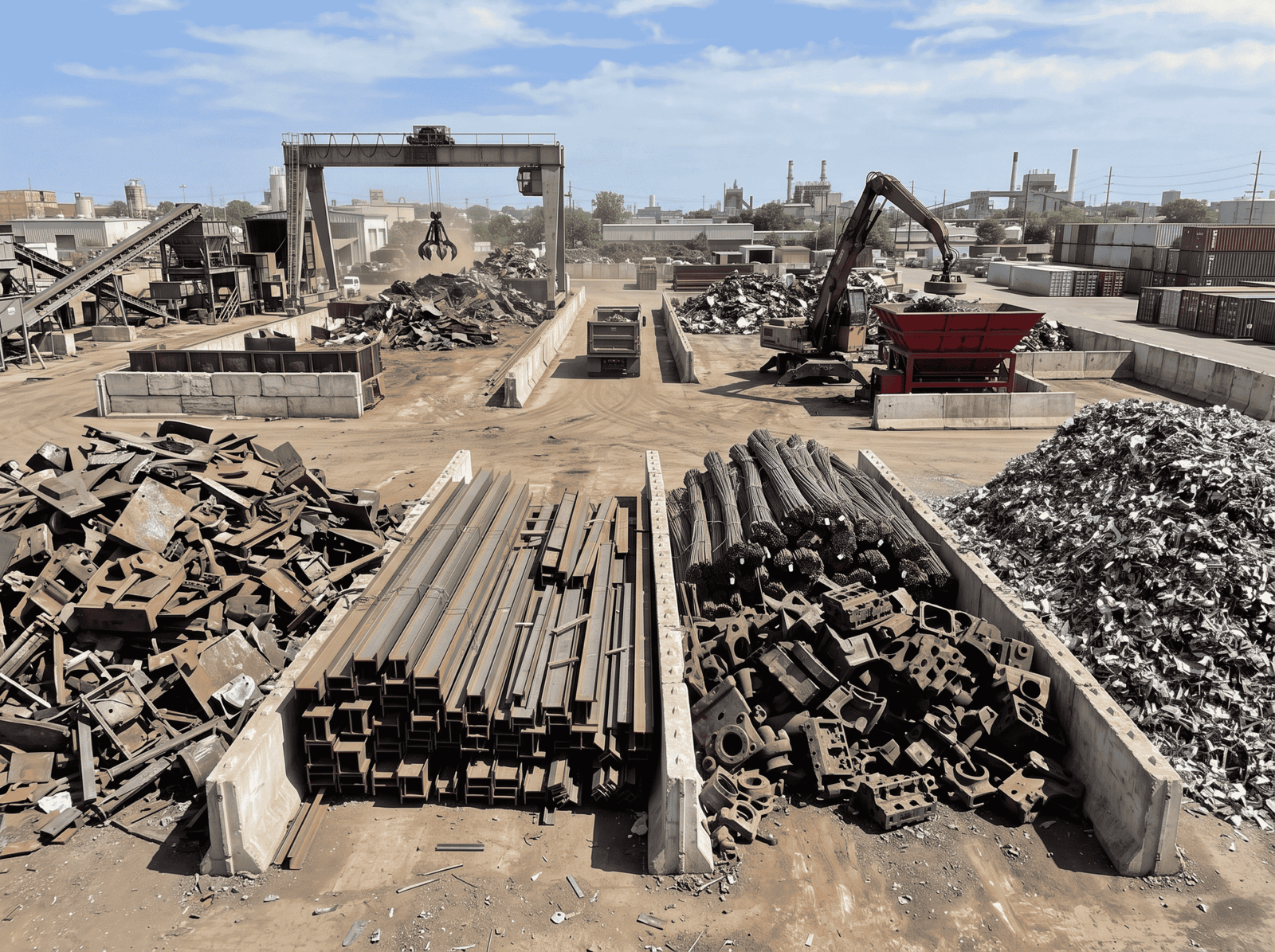
1. Heavy Melting Steel (HMS 1)
Among the types of iron scrap and steel covered here, if you want the best value, then you should consider HMS 1.
Heavy Melting Steel, also known as HMS 1, is thick and clean uncoated iron or steel.
Typical examples include:
- I-beams
- Heavy steel plates
- Thick construction offcuts
- Solid machinery frames
- Heavy structural steel
The supplied UAE market estimates put HMS 1 around AED 1.20 to AED 1.60 per kg, while another 2026 estimate gives a higher range of around AED 1.80 to AED 2.20 per kg. The difference shows why you should treat online figures as market guides rather than guaranteed buying prices.
Why does HMS 1 pay more?
It is thick, dense, and relatively straightforward for steel mills to process.
If you do have a stock of structural steel, avoid blending it with more lightweight or heavily-contaminated material, if possible. Separate can help to make grading easier.
2. Clean Rebar and Construction Steel
If you are associated with any construction or demolition work, you will most likely have come across the piles of leftover rebar. Another valuable ferrous scrap is clean rebar.
It includes:
- Reinforcing bars
- Construction offcuts
- Structural steel pieces
- Unused or removed steel sections
The supplied UAE estimates place clean rebar around AED 1.15 to AED 1.40 per kg. Clean and relatively corrosion-free pieces tend to command the better end of the range.
The important word here is clean.
Rebar that is encased in concrete, soil, plastic or other debris is harder to process. When selling metal if it is a construction site, it will be easier to separate out the metal before the sale.
3. Heavy Melting Steel (HMS 2)
HMS 2 is still heavy melting scrap but it consists of general lighter gauge material or more contamination than HMS 1.
It can include:
- Smaller steel pipes
- Lighter structural pieces
- Thin heavy-gauge steel
- Slightly rusted material
- Some coated steel
The estimates supplied in the course of this investigation indicate that in 2026 the price of the market is in the range of AED 0.80 – AED 1.20 per kg, while another source indicates a range of AED 1.30 – AED 1.70 per kg.
So why is it cheaper than HMS 1? The answer is mainly quality and processing.
Thinner pieces and material with coatings or other impurities can result in more processing work. That’s why a buyer may offer less even when the load looks heavy.
4. Cast Types of Iron Scrap
Cast iron is easy to recognize once you’ve handled it a few times. It’s heavy and generally brittle compared with ordinary structural steel. You can find cast iron in things like:
- Engine blocks
- Brake components
- Heavy machine parts
- Old pipes
- Industrial castings
Estimates provided were in the range of AED 0.70 to AED 1.40 per kg of cast iron and based on grade/market.
Cast iron cannot be regarded as a “structural steel” and has its own recycling properties.
For that reason, it’s worth separating cast iron from other ferrous scrap when possible.
5. Iron Turnings and Light Scrap
The last category is where things get a little less exciting from a price perspective. Iron turnings, borings, and other light machining scrap are produced when metal is cut, drilled, or turned during manufacturing.
They’re often called swarf. These scraps can look like small curls, chips, or shavings.
The supplied estimates put iron turnings and borings around AED 0.40 to AED 0.70 per kg. Their lower value is partly related to their low density and the possibility of oil, moisture, or other contaminants.
Light scrap can still add up if you’re dealing with a machine shop or factory that produces large quantities.
Which Types of Iron Scrap Pays the Most?
Based on the supplied 2026 UAE estimates, HMS 1 generally comes out on top among these categories. A simple comparison looks like this:
Types of Iron Scrap | Approx. UAE Value |
HMS 1 | AED 1.20–2.20/kg |
Clean Rebar | AED 1.15–1.40/kg |
HMS 2 | AED 0.80–1.70/kg |
Cast Iron | AED 0.70–1.40/kg |
Iron Turnings/Borings | AED 0.40–0.70/kg |
The ranges overlap because scrap prices change and different buyers may grade material differently. The source material itself shows noticeably different 2026 estimates from different market references, so getting a current quote for your actual load is more reliable than relying on one published number.
What About Mixed Scrap?
This is where sellers can lose some value. A straight or mixed scrap loads distinction matters because a buyer needs to spend more time sorting a mixed pile.
A load containing:
- Heavy steel
- Thin sheet
- Cast iron
- Pipes
- Random metal pieces
May not receive the same rate as a properly separated load of one grade. Mixed ferrous scrap was estimated in the supplied material at around AED 0.60 to AED 1.00 per kg.
If you have enough material to make sorting practical, separate the heavier grades from lighter scrap before requesting a quote.
Does Rust Reduce the Price?
Some rust doesn’t automatically make iron scrap metal worthless. Rust will occur on the old steel naturally and is particularly prone to occur on steel that has been stored outdoors. It’s not so much how severe the corrosion is, but whether or not the whole load is affected.
Thick, relatively clean waste will be more appealing than thin, poorly corroded material combined with other waste.
The same goes for coatings.
Paint, plastic, concrete, rubber, and other attached materials can make a load harder to process.
What Is Types of Iron Scrap Torching?
Scrap Torching is the process of cutting large metals into smaller and more manageable pieces with a cutting torch.
Can be helpful when handling excess-sized steel constructions or equipment that does not fit easily for moving purposes.
Torboning, however, is not a practice to be taken lightly.
Some items may contain:
- Fuel
- Oil
- Pressurized components
- Refrigerants
- Other hazardous materials
If you’re unsure whether an item is safe to cut, let an experienced scrap professional assess it first.
How to Get a Better Price for Types of Iron Scrap
You don’t need to do complicated preparation. A few basic steps can help.
1. Separate the grades
Keep heavy steel, cast iron, rebar, and light scrap apart where possible.
2. Remove obvious non-metal waste
Take out plastic, wood, cardboard, and other rubbish that doesn’t belong in the load.
3. Keep large quantities together
When you are clearing a building site, workshop or warehouse, group materials into a more convenient load rather than continue to sell smaller amounts over and over.
4. Ask for an on-site assessment
A professional buyer can inspect the material and determine what you actually have. This is particularly useful when the pile contains several grades.
Sell Your Iron Scrap With Open Today
Open Today Aluminium & Copper Trading buys scrap iron and other metal items from people and companies around the UAE. We take materials from homes, small shops, workshops, job sites, and other business places.
You can find our work base in Mussafah, Abu Dhabi. We serve clients in Abu Dhabi, Dubai, Sharjah, and nearby areas too.
The steps are simple:
- Contact the team by phone or WhatsApp.
- Arrange an on-site inspection.
- Get a price based on your scrap.
- Agree on the deal.
- Have the scrap collected and receive payment.
Open Today also buys aluminium, copper, brass, batteries, AC units, fridges, washing machines, cables, and general e-scrap.
For anyone searching for a reliable Scrap Buyer UAE, having the material inspected on-site can be much easier than trying to identify every grade yourself.
To Conclude
Knowing the different types of iron scrap can make a real difference when you’re selling.
HMS 1 usually brings the highest payout. A big reason is its thickness and higher density, which also fits well for recycling steel. Clean rebar can do well too. On the other hand, HMS 2 tends to sell for less. The same is often true for cast iron. Light turnings also usually land in the lower price brackets.
The biggest takeaway is simple: don’t treat every piece of iron as the same.
Separate the pieces you can. Keep the material in good shape when possible. Then ask for a fresh quote based on the load you actually have. Scrap prices change often. Also, the grade of your scrap can matter more than you may think.
Frequently Asked Questions (FAQs)
What is the current scrap rate for iron in Dubai?
In Dubai, iron scrap rates usually fall between AED 0.80 and AED 1.85 per kg. This depends on what kind it is, the grade, and the condition.
What is the value of 1 kg iron?
For 1 kg of scrap iron, the price is often about AED 0.80 to AED 1.85. The final number depends on the grade and what buyers want at the time.
How much is 1kg of scrap?
There is no single rate for scrap. In the UAE, 1 kg can be near AED 0.40 up to AED 40 plus. The metal type and the quality decide the price.
What is the price of 1 kg scrap copper in the UAE today?
Scrap copper prices can vary by grade, with higher-quality copper typically selling for around AED 25–40 per kg. Insulated copper wire usually fetches less