
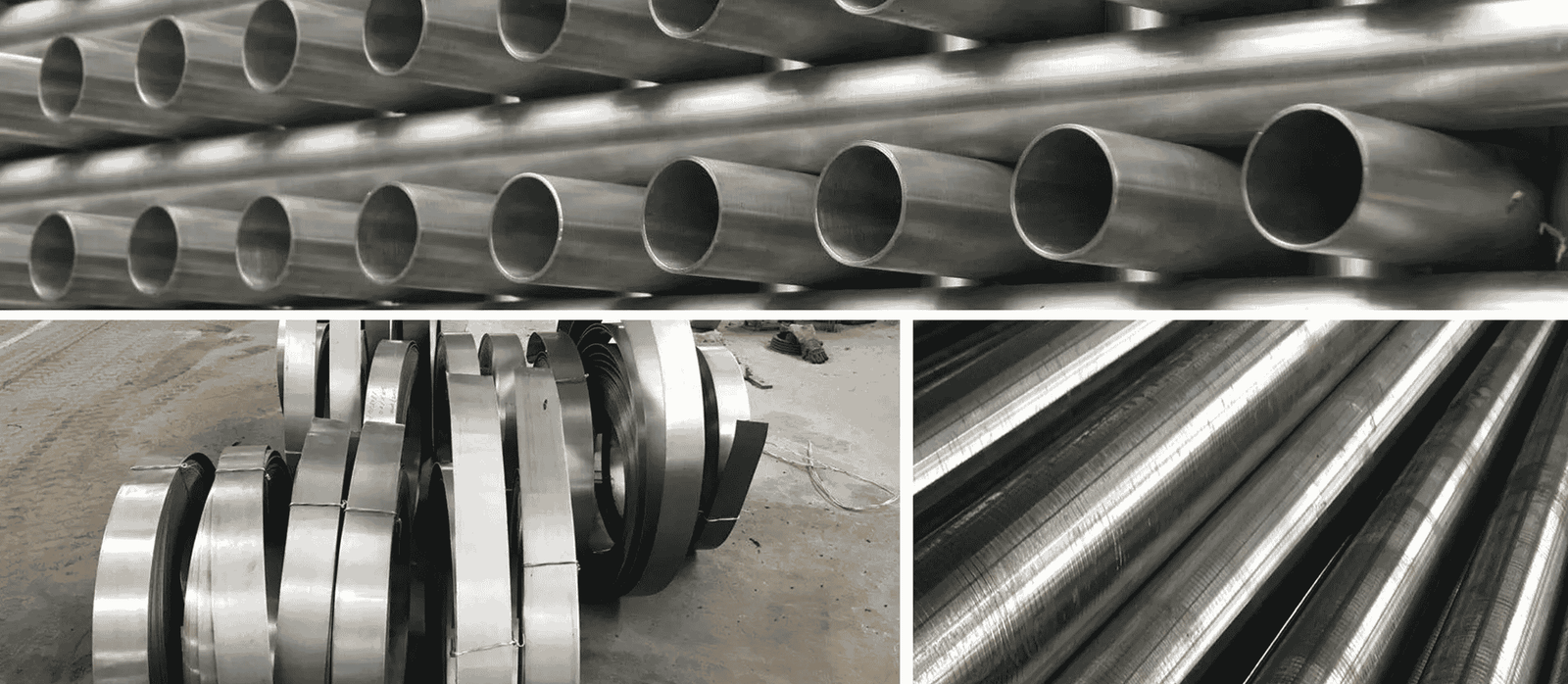
Determine Different Types of Stainless Steel and How to Choose the Best One
Different types of Stainless steel is indeed one of those metals that you see everywhere, but are seldom thought about.
This alloy is used in sinks and appliances‚ pipes‚ food processing and service equipment‚ medical devices‚ automotive parts‚ building components‚ and many more․ While many products are stamped stainless steel‚ this does not mean that any stainless steel is used or that it is from the same grade․
Different types of stainless steel has a combination of chromium and nickel and possibly other metals such as carbon.The proportions of these metals vary depending on the type of stainless steel and are the factors that will determine how the metal reacts, where it can be used and how readily it can be identified.
So, how do you tell different types of stainless steel apart?
A magnet may help․ The design and finish‚ markings‚ and sometimes the behavior of the metal under various tests can be important indicators․ Professional testing is a more reliable method of identification․
Here is a practical guide to help you sort out what you have․
What Makes Stainless Steel Different?
Different types of Stainless steel is a family of steel alloys with iron as the main component‚ to which chromium is added to provide corrosion resistance‚ and sometimes nickel‚ molybdenum and other alloying elements depending on the grade of stainless steel․
This is why two stainless steel products may appear to be almost the same but may work very differently.
For example:
- 304 stainless steel is widely used for kitchen equipment and general applications.
- 316 stainless steel offers better resistance to chloride and marine environments.
- 430 stainless steel is magnetic and commonly used in appliances and automotive applications.
- 410 stainless steel is known for hardness and is often used for tools, valves, and cutlery.
The main families of stainless steels are austenitic‚ ferritic‚ martensitic‚ duplex and precipitation-hardening stainless steels․
The Main Different Types of Stainless Steel to Know
1. Austenitic Stainless Steel
The most common family of stainless steel is the austenitic class‚ of which the most common are grades 304 and 316․ These are alloys of chromium and nickel with very good corrosion resistance‚ high strength‚ and good processability․
You can find them in:
- Kitchen sinks and cookware
- Food-processing equipment
- Pipes and fittings
- Medical equipment
- Storage tanks
- Outdoor equipment
One useful clue is magnetism. Typical 304 and 316 are usually not or very slightly magnetic. Some austenitic different types of stainless steel, however, may become slightly magnetic as a result of bending, forming or heavy machining.
If a magnet is not sticking, then it could be 304 or 316. However, don’t take that as a sign.
2. Ferritic Stainless Steel
The largest group of ferritic stainless steels is the 400 series‚ with 430 being one of the best-known grades․
Ferritic stainless steels are usually magnetic and have high chromium‚ but usually low (or no) nickel‚ and therefore most ferritic grades are cheaper than 304 and 316․
Common uses include:
- Kitchen appliances
- Washing machines
- Automotive trim
- Cooking equipment
- Indoor architectural applications
It can be helpful, therefore, to be able to tell whether a magnetic attraction is strong, which is an indication that it is a ferritic grade.
3. Martensitic Stainless Steel
Martensitic stainless steels are for the most part magnetic.
These have a higher carbon content than ferritic grades and can be heat treated to harden. That provides them with the hardness that they need for applications like knives, cutting tools, valves and certain mechanical parts.
410 and 420 are common examples.
If you have a stainless-steel knife‚ or a hard metal part that can be strongly attracted to a magnet‚ it is likely martensitic stainless steel․
4. Duplex Stainless Steel
Duplex stainless steel is a stainless steel with a mixture of austenitic and ferritic microstructures․
This makes it a unique material with properties in balance. Because of its higher strength and strong corrosion resistance duplex grades are used in challenging applications like chemical processing, and seawater applications.
Duplex stainless steel may also be magnetic so a magnet will not necessarily differentiate the two grades․
5. Precipitation-Hardening Stainless Steel
This is a more specialist family.
Precipitation-hardening stainless steels are formulated to obtain high strength by applying certain heat-treatment procedures. They are applied in specific situations where strength is of particular importance.
These grades are not typically found in normal household junk but they belong to the “family” of stainless steel.
How to Identify Stainless Steel
When you find something that looks as if it may be metal‚ you will not always be correct but you should try some simple tests․
Start With a Magnet
This is probably the easiest test. Place a magnet against a clean part of the metal.
- Strong attraction: it could be ferritic or martensitic stainless steel.
- Little or no attraction: it could be austenitic stainless steel such as 304 or 316.
- Moderate attraction: duplex or a worked austenitic grade may be possible.
But there is an important catch. Magnetism does not tell you the exact grade or quality of different types of stainless steel. Even 304 can develop some magnetic response after cold working.
Look for Markings
Before testing anything, check the metal for markings. You may find numbers such as:
- 304
- 316
- 410
- 420
- 430
You may also see terms such as A2 or A4 on certain stainless steel shapes products.
A grade marking can give you a much better starting point than appearance alone. If the grade is for a purchase, construction project or for scrap sorting, however, it is preferable to check the grade than take an unverified marking on faith.
How Can I Tell if Something Is Stainless Steel?
Look at the surface first.
The stainless steel will typically exhibit a clean metal finish and be extremely resistant to typical wear and tear. However, the appearance isn’t the only factor since polished steel could look very much like plated steel and other metals.
A magnet test can help narrow things down.
You can also compare the item with known different types of stainless steel pieces. Professional testing can help you to be far more confident in distinguishing stainless steel from ordinary carbon steel.
The difference is important for scrap as it may influence the value and sorting of the metals.
How to Tell Different Types of Stainless Steel From Steel
It is at this point that people get confused. Often you will see the words “non ferrous stainless steel”, but because stainless steel contains iron, it is a ferrous metal. The biggest difference between stainless steel and ordinary steel is their composition and corrosion resistance.
While normal carbon steel will rust orange-brown quickly under moisture and oxygen‚ the amount of chromium in stainless steels is sufficient to allow the formation of a coherent oxide layer over the surface which gives them their corrosion-resistant properties․
But don’t use rust alone as your test.
Visual inspection alone can be misleading with painted, coated, dirty or poorly maintained steel. Sorting can be done with a magnet, but it cannot be used to identify if a metal is stainless steel or find its grade.
What About a Spark Test?
The principle is that the sparks that are produced when a small part of the metal is lightly ground will reveal the nature of the material. The branching, brightness and length of the spark varies by metal.
This is however more suitable for individuals who are experienced in identifying metal and have experience with this.
It is not a good indicator of confidently stating by an inexperienced person that this is definitely 304 or this is definitely 316. Spark testing is useful for sorting, but exact grade identification requires more reliable methods.
Can You Tell 304 and 316 Apart Easily?
Not usually. This is one of the biggest limitations of basic different types of stainless steel identification.
Both the 304 and 316 are austenitic grades and typically are not magnetic in their normal states. They can be almost identical in appearance as well.
The important difference is their chemical composition. Molybdenum is added to 316 for increased resistance in certain corrosive environments, particularly in chlorides.
A chemical spot test for molybdenum may be used to help differentiate between 304 and 316.
A handheld XRF analyzer can be used to identify the elemental composition of the alloy and give a much more accurate identification.
Is Stainless Steel Worth Anything as Scrap?
Yes, stainless steel can have scrap value.
But the price depends on several things, including the grade, cleanliness, quantity, and whether other materials are attached.
It’s easier to sort and process the stainless steel when it’s clean versus when it’s really dirty. Items made from stainless steel and plastic, rubber or insulation, or other metals may require further sorting before the stainless steel can be recycled.
Separating different metals can make it easier if you are selling a large quantity.
Selling Stainless Steel Scrap in the UAE
If you have unwanted stainless steel sitting in a workshop, warehouse, restaurant, construction site, or home, you don’t necessarily need to throw it away.
Open Today Aluminium & Copper Trading buys different types of scrap across the UAE, including stainless steel and other metals.
Their approach is straightforward:
- Contact the scrap buyer.
- Have the material inspected.
- Agree on the price.
- Arrange collection.
- Get paid for the scrap.
For businesses with larger quantities, sorting your stainless steel before collection can make it easier to assess the material. If you are looking for a Scrap Buyer UAE, it also helps to have the material ready for inspection instead of mixing every type of metal together.
When Should You Get Stainless Steel Professionally Tested?
A basic magnet test is fine when you only need a rough idea. But professional identification makes more sense when:
- You need to confirm 304 versus 316.
- You are buying a large quantity of stainless steel.
- The material will be used in a demanding environment.
- You are dealing with industrial components.
- The scrap has a potentially higher-value grade.
- You need accurate alloy information for documentation.
One of the more accurate options is the handheld XRF analyzer that reads the elemental composition of the metal along with physical clues.
In Summary
An understanding of the various different types of stainless steel can prevent misjudging an unknown piece of metal.
Start simple. Check the markings. Try a magnet. Consider the application and condition of the item. If the grade is really important turn to chemical testing or XRF analysis.
Last, but not least, remember that a magnet can help you, but it cannot tell you everything.
This is particularly crucial when separating different types of stainless steel for recycling. By sorting grades and other metals, the material may be easier to evaluate and can help you to determine the scrap value.
Frequently Asked Questions (FAQs)
How can I tell if my stainless steel is 304 or 316?
Magnets cannot be used to distinguish between these grades‚ the only reliable methods are a grade mark‚ a chemical test‚ or an XRF analyzer․
Which is better, 300 or 304 stainless steel?
304 stainless steel is considered more versatile than 300 series stainless steel․ 300 series includes several other grades for different applications‚ but as 304 is a specific grade within the 300 series‚ they are not the same․
What are signs of fake different types of stainless steel?
Signs that an alloy might be present include rapid rusting‚ discoloration‚ meaningful flaking or peeling‚ or a lack of corrosion resistance․ Testing by an expert is suggested․
Which different types of stainless steel is better, 304 or 316?
316 generally performs better in acidic‚ saline or chloride environments due to its molybdenum content․ 304 is good for most applications‚ and is also less expensive than 316․